When you want to sell or buy a business, the exposé is the central document that presents it. It answers the first question every interested party has: „What kind of company is this, and does it fit me?“ It is the business card of a business on its way to being sold.
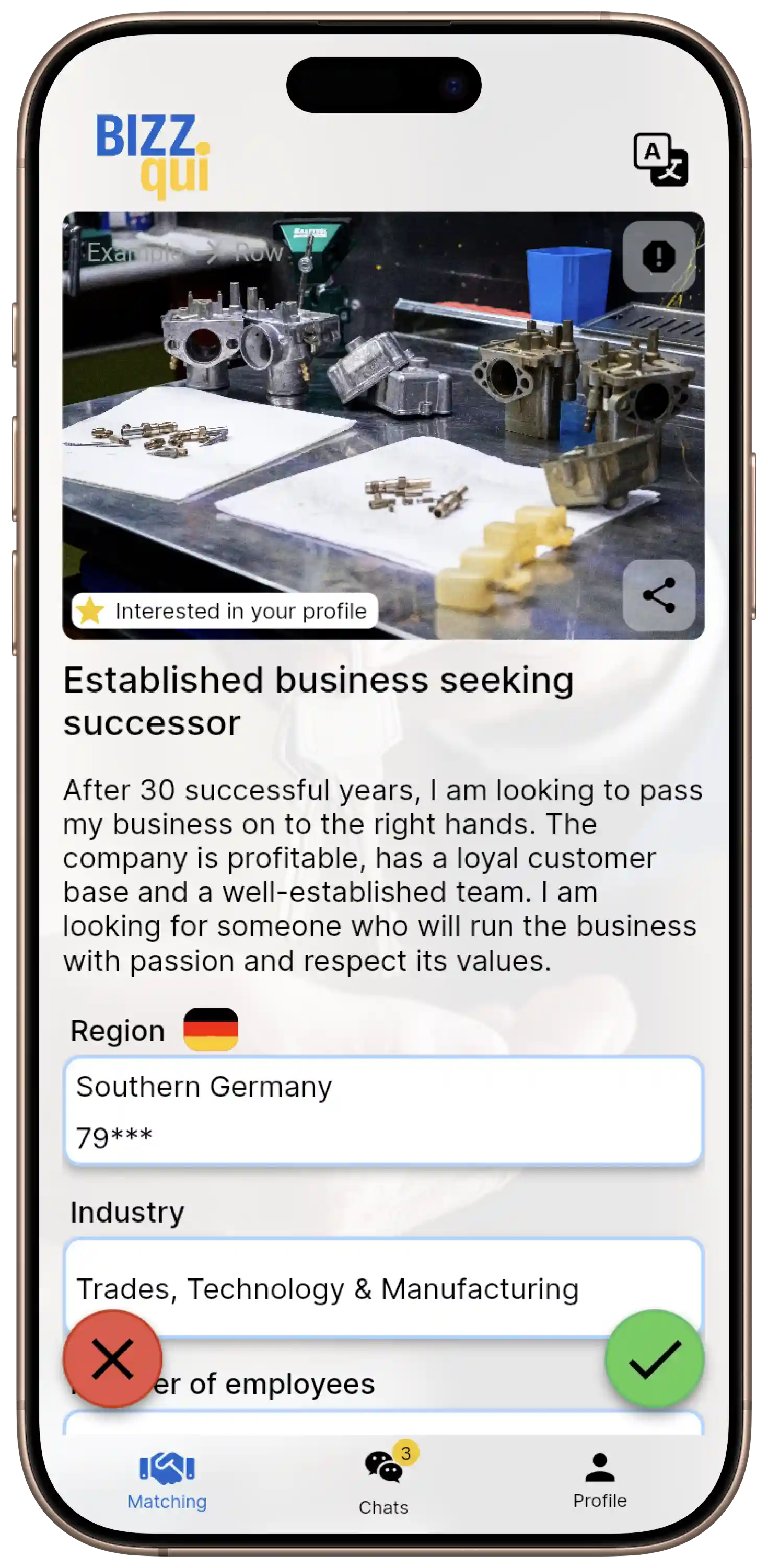
In practice there are almost always two stages. First comes a short, anonymous exposé, often called a teaser or short profile. It names the industry, region, rough size (revenue, earnings, number of employees), the reason for selling and the opportunities. But deliberately not the company name. That way, neither customers nor competitors nor the company's own employees find out about a sale too early.
Only once someone shows serious interest and signs a non-disclosure agreement (NDA) do they receive the detailed exposé, often called an information memorandum. This contains the company name and the detailed figures needed to make a real purchase decision. A data room with the full documents usually follows.
A good detailed exposé typically includes a short description, information on the industry and market, the key figures (revenue, EBITDA or earnings), details on employees and location, the customer structure, the unique strengths, the reason for selling, and an initial idea of the price and process. When a business succession is planned, it also covers how strongly the business depends on the owner.
The purpose is simple: to spark interest while separating the wheat from the chaff. The exposé should present the business attractively and honestly. Any embellishment tends to surface during due diligence. At BIZZqui, your anonymous profile in the app takes on exactly this role of the first short exposé.
For business sellers
As a seller you want two things at once: to show your business in its best light and still stay unrecognised until there is serious contact. That is exactly what the anonymous short exposé is for. Highlight your strengths, the rough size and your reason for selling, but leave out anything that would give you away. That protects your team, your customers and your reputation.
Stay honest while doing so. An exposé that promises more than the business can deliver almost always leads to disappointment and broken-off talks. Describe the substance as it really is: the well-run routines, the loyal customers, the experienced team. That calm honesty resonates more with the right buyers than any exaggeration ever could.
For corporate buyers
As a buyer, the exposé is your first real look inside. Even the anonymous short profile tells you a lot: does the industry fit you, is the size right, does the reason for selling make sense? An owner retiring is a very different signal from a business someone wants to offload quickly. Watch for clarity. Vague statements are often a sign that you should ask more closely.
Once you receive the detailed exposé after the NDA, look at the substance behind the numbers: how is revenue spread across customers, how strong is the owner dependency, how stable is the team? A good exposé answers these questions openly. If key points are missing, that is no reason to walk away, but a good reason to raise them in conversation.
Example
An anonymous exposé might describe „a painting business in eastern Switzerland, 6 employees, around 480,000 EUR in revenue, healthy earnings, the owner is retiring“, with no company name. Interested buyers get in touch, sign the non-disclosure agreement, and then receive the detailed exposé with the name, location and exact figures. This keeps the sale protected until there is serious contact, while still giving a clear and honest picture of the business early on.
FAQ
Why is the first exposé anonymous?
So that nobody learns about the sale too early. If customers, competitors or your employees got wind of it, it could unsettle the business. That is why the anonymous short exposé names only the industry, region and rough size, not the name. The protection only becomes binding with the non-disclosure agreement.
When do I get the detailed exposé with all the figures?
Only once you show serious interest and have signed a non-disclosure agreement (NDA). You then receive the full exposé, often called an information memorandum, with the company name, location and exact figures. After that the seller usually opens the data room with the supporting documents.
What does an exposé usually contain?
A short description, information on the industry and market, the key figures such as revenue and earnings, details on employees and location, the customer structure, the strengths of the business, the reason for selling, and an initial idea of the price and process.
Is a teaser the same as an exposé?
The teaser is the short, anonymous first stage of the exposé. Some call it a short profile. It sparks the first interest, while the actual detailed exposé only follows after the NDA.
How does a good exposé show me that buying beats founding?
An honest exposé makes visible the substance that a new venture would have to build up laboriously: existing revenue, loyal customers, an experienced team and working routines. When these values are described clearly, you can see in black and white that you are not starting from zero but taking over something that already works. How such a business handover plays out, the seller shows you as the talks continue.
Can I simply trust an exposé?
The exposé is an honest first presentation, but not a substitute for later checks. It sparks interest and gives you orientation. You examine the exact figures and documents in detail afterwards, during due diligence, before you decide.
Back to glossary