
Business Succession Glossary
All the key terms around selling, buying and valuing a business, explained clearly
Business Succession Glossary
All the key terms around selling, buying and valuing a business, explained clearly
Business Succession Glossary
All the key terms around selling, buying and valuing a business, explained clearly
Succession
Glossary
All the key terms around selling, buying and valuing a business, explained clearly
All terms
Transaction process
Legal & tax
Deal structures
A
Asset Deal
In an asset deal you buy the individual assets of a business, such as machines, inventory, customer base and contracts, rather than the shares in the company.
Acquisition financing
Acquisition financing is the mix of your own funds and outside money you use as a buyer to pay the purchase price of a business.
B
Business Valuation
Business valuation determines the value of a company. Various methods are used: the earnings value, net asset value, or multiples approach.
Business handover
The business handover is the moment a business actually passes to its successor, with everything included, from handing over the keys to introductions with customers.
Business plan
A business plan is your written concept for how you will run and gradually develop the business you buy.
Business Succession
Business succession means handing a company over to a successor when the owner stops running it.
C
Company Value
The company value describes the monetary value of a business. It is the basis for the price negotiation, but not automatically the price itself.
Capitalized Earnings Method
The capitalized earnings method values a company based on its future earning power. What counts is not the machinery and materials on hand, but what the business will earn going forward.
Cash flow
Cash flow is the actual movement of money in your business: how much money is really left after income and expenses. It shows whether your company can cover bills, wages and a loan on its own.
Commercial lease
A commercial lease sets out who uses a business's premises and on what terms.
D
Due Diligence
Due Diligence is the thorough examination of a company by the buyer before the purchase. It uncovers risks and checks whether the price and valuation are sound.
Discounted Cash Flow (DCF)
Discounted Cash Flow (DCF) estimates a business's value based on the money it is expected to generate in the future, and translates that future money back into what it is worth today.
Data Room
A protected, usually digital folder where the seller gathers all confidential documents for serious prospective buyers.
Depreciation
Depreciation spreads the purchase cost of a long-lasting asset over its useful life, instead of booking it fully as an expense in the year of purchase.
Development loan
A development loan is a low-interest loan from a public promotional bank that helps you finance taking over a business.
E
EBITDA
EBITDA stands for earnings before interest, taxes, depreciation and amortization. It shows how much a company earns operationally, independent of financing and taxes.
Earn-Out
With an earn-out, part of the purchase price is only paid later, depending on how the business develops after the handover.
Exposé (company profile)
The exposé is the sales document that introduces a business to potential buyers: first anonymously, then with full detail.
Equity
Equity is the part of a business that belongs to the owner after all debts are subtracted. When buying, it is the money the buyer contributes themselves.
F
G
H
I
J
K
L
Letter of Intent
A letter of intent is a written declaration of intent. It records that buyer and seller are seriously negotiating a takeover before the actual review begins.
Liquidity
Liquidity is a business's ability to pay its ongoing bills at any time from the cash it has on hand.
Legal form
The legal form is the legal structure a business is run under. It determines liability, taxes, and how a succession can even take place.
M
N
Net Asset Value
The net asset value is the value of all a company's assets minus its liabilities. It shows what substance is actually there.
Non-disclosure agreement (NDA)
A contract in which an interested buyer commits to keeping all confidential information about the business secret.
Non-compete clause
A non-compete clause commits the seller not to open a competing business or poach loyal customers for a limited period after the sale.
P
Purchase agreement (SPA)
The purchase agreement is the legally binding contract that finalises the sale of the business.
Purchase Price Negotiation
The purchase price negotiation is the process in which seller and buyer agree on a concrete price for a business.
Profitability
Profitability measures how much profit a business earns relative to a reference figure such as revenue or equity.
Q
R
T
Transition Period (Handover Training)
The transition period is the time right after the purchase, when the former owner trains the successor, personally introduces customers and passes on their knowledge.
Transfer of Undertaking
In a transfer of undertaking, the existing employment contracts pass automatically to the new owner along with the business.
Taxes on selling a business
When you sell a business, you usually pay tax on the gain from the sale. How much stays with you depends on the country and the deal structure.
u
W
X
Y
Z
All terms
Transaction process
Legal & tax
Deal structures
A
Asset Deal
In an asset deal you buy the individual assets of a business, such as machines, inventory, customer base and contracts, rather than the shares in the company.
Acquisition financing
Acquisition financing is the mix of your own funds and outside money you use as a buyer to pay the purchase price of a business.
B
Business Valuation
Business valuation determines the value of a company. Various methods are used: the earnings value, net asset value, or multiples approach.
Business handover
The business handover is the moment a business actually passes to its successor, with everything included, from handing over the keys to introductions with customers.
Business plan
A business plan is your written concept for how you will run and gradually develop the business you buy.
Business Succession
Business succession means handing a company over to a successor when the owner stops running it.
C
Company Value
The company value describes the monetary value of a business. It is the basis for the price negotiation, but not automatically the price itself.
Capitalized Earnings Method
The capitalized earnings method values a company based on its future earning power. What counts is not the machinery and materials on hand, but what the business will earn going forward.
Cash flow
Cash flow is the actual movement of money in your business: how much money is really left after income and expenses. It shows whether your company can cover bills, wages and a loan on its own.
Commercial lease
A commercial lease sets out who uses a business's premises and on what terms.
D
Due Diligence
Due Diligence is the thorough examination of a company by the buyer before the purchase. It uncovers risks and checks whether the price and valuation are sound.
Discounted Cash Flow (DCF)
Discounted Cash Flow (DCF) estimates a business's value based on the money it is expected to generate in the future, and translates that future money back into what it is worth today.
Data Room
A protected, usually digital folder where the seller gathers all confidential documents for serious prospective buyers.
Depreciation
Depreciation spreads the purchase cost of a long-lasting asset over its useful life, instead of booking it fully as an expense in the year of purchase.
Development loan
A development loan is a low-interest loan from a public promotional bank that helps you finance taking over a business.
E
EBITDA
EBITDA stands for earnings before interest, taxes, depreciation and amortization. It shows how much a company earns operationally, independent of financing and taxes.
Earn-Out
With an earn-out, part of the purchase price is only paid later, depending on how the business develops after the handover.
Exposé (company profile)
The exposé is the sales document that introduces a business to potential buyers: first anonymously, then with full detail.
Equity
Equity is the part of a business that belongs to the owner after all debts are subtracted. When buying, it is the money the buyer contributes themselves.
F
G
H
I
J
K
L
Letter of Intent
A letter of intent is a written declaration of intent. It records that buyer and seller are seriously negotiating a takeover before the actual review begins.
Liquidity
Liquidity is a business's ability to pay its ongoing bills at any time from the cash it has on hand.
Legal form
The legal form is the legal structure a business is run under. It determines liability, taxes, and how a succession can even take place.
M
N
Net Asset Value
The net asset value is the value of all a company's assets minus its liabilities. It shows what substance is actually there.
Non-disclosure agreement (NDA)
A contract in which an interested buyer commits to keeping all confidential information about the business secret.
Non-compete clause
A non-compete clause commits the seller not to open a competing business or poach loyal customers for a limited period after the sale.
P
Purchase agreement (SPA)
The purchase agreement is the legally binding contract that finalises the sale of the business.
Purchase Price Negotiation
The purchase price negotiation is the process in which seller and buyer agree on a concrete price for a business.
Profitability
Profitability measures how much profit a business earns relative to a reference figure such as revenue or equity.
Q
R
T
Transition Period (Handover Training)
The transition period is the time right after the purchase, when the former owner trains the successor, personally introduces customers and passes on their knowledge.
Transfer of Undertaking
In a transfer of undertaking, the existing employment contracts pass automatically to the new owner along with the business.
Taxes on selling a business
When you sell a business, you usually pay tax on the gain from the sale. How much stays with you depends on the country and the deal structure.
u
W
X
Y
Z
Ready for the next step?
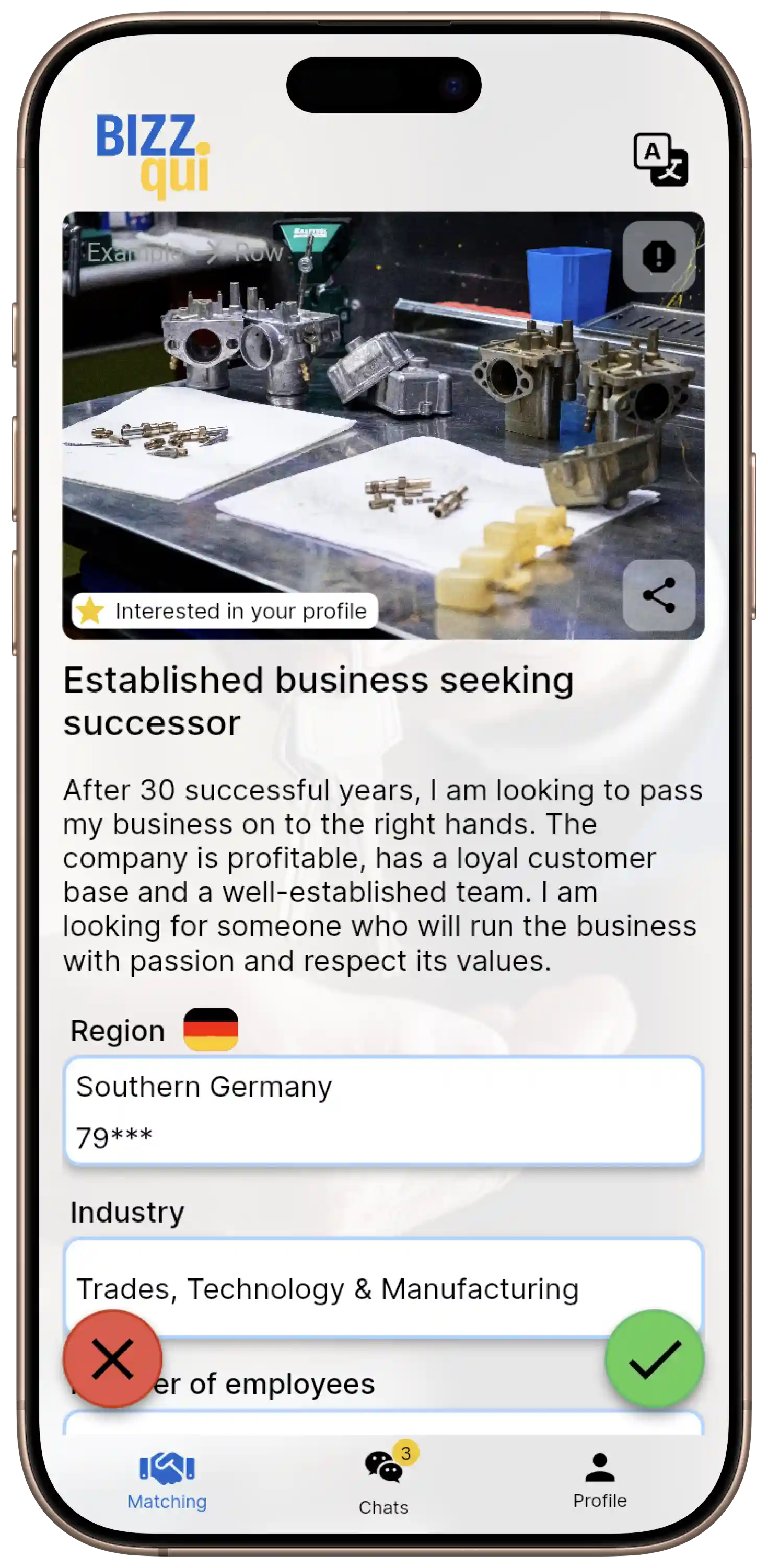
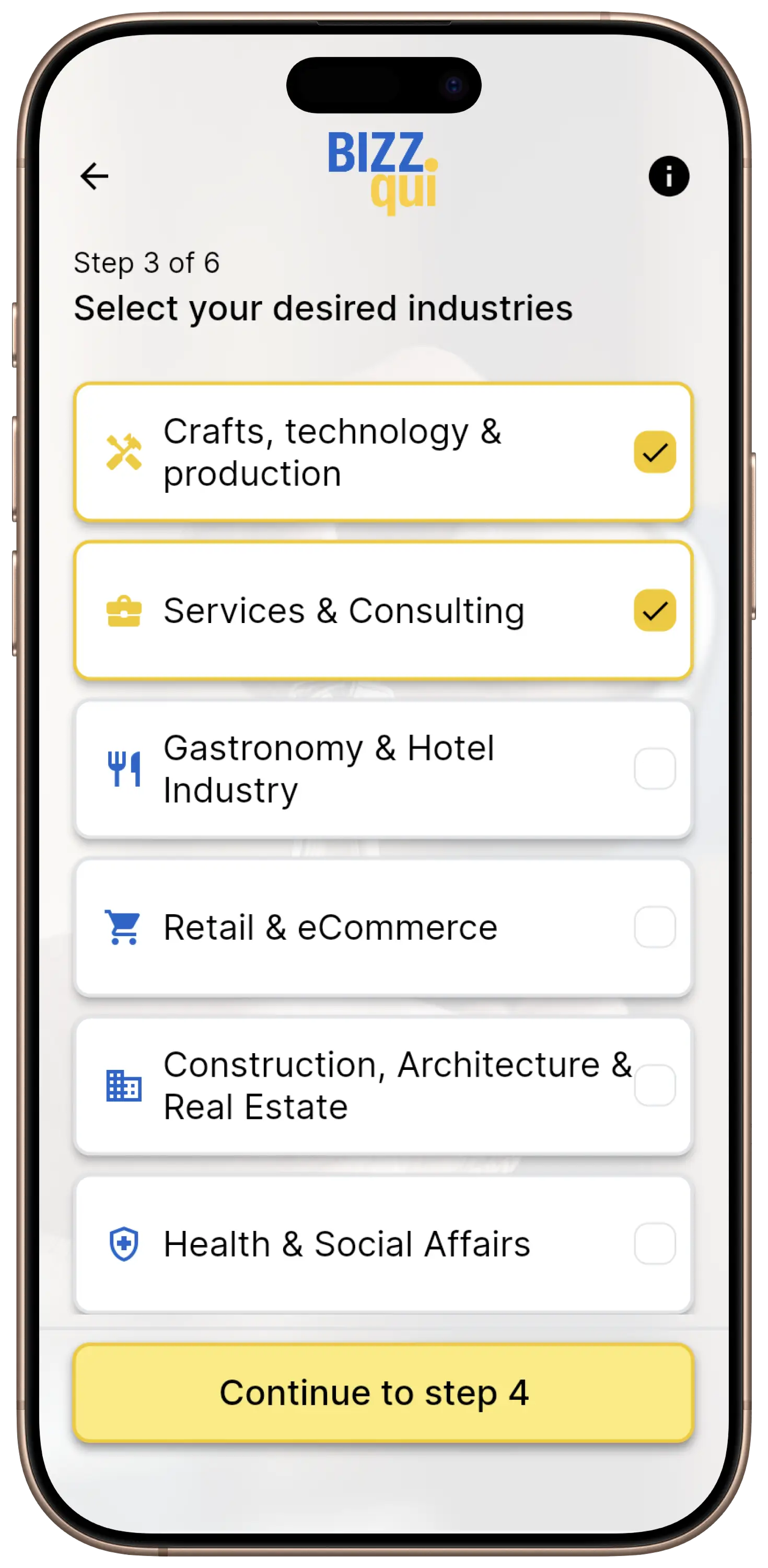
Start now for free and find your Perfect Match for business succession.

Ready for the next step?
Start now for free and find your Perfect Match for business succession.
Ready for the next step?
Start now for free and find your Perfect Match for business succession.
Ready for the next step?
Start now for free and find your Perfect Match for business succession.